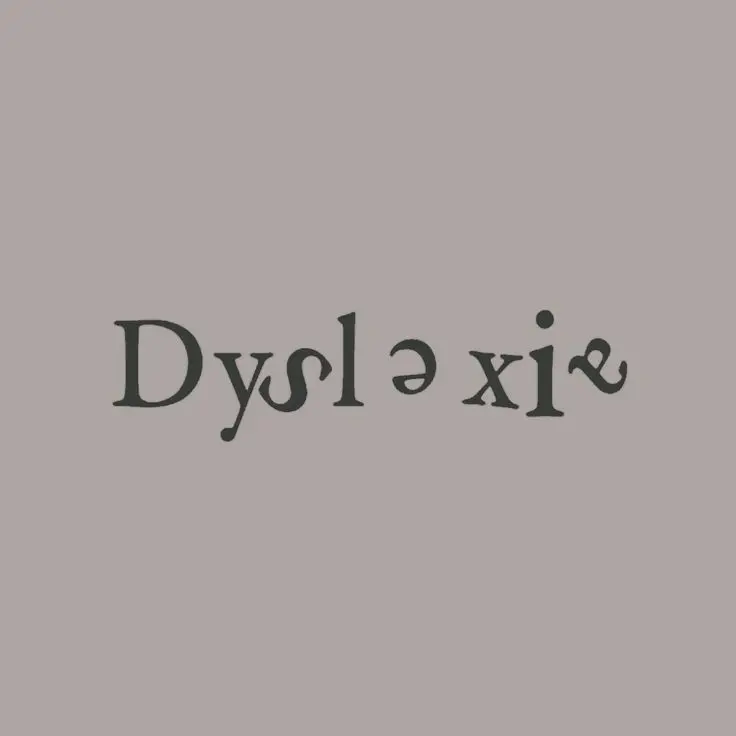
I grew up thinking I was kind of dumb. Just like that. No fancy diagnosis, no scientific explanation and nobody telling me my brain simply “processed things differently.” No. Back then it was much simpler: “Cordelia, read out loud.” And me: let the earth swallow me whole.
Because while everyone else saw a perfectly normal sentence, I saw some kind of Egyptian riddle where the letters switched places without warning. Reading in front of the class was an extreme sport for me. I'd start off very confident: “Christopher Columbus discovered America in fourteen…” And three seconds later I had discovered Asia, Christopher was called Christophermus and I had probably turned 1492 into 1942.
But with confidence. That much, yes. Because if there's one thing we dyslexics develop from a very young age, it's a spectacular ability to keep going even when we have absolutely no idea what's happening.
And to complete the package, I also have attention deficit. Meaning my brain didn't just move the letters around. It also wandered off. The teacher could be explaining something incredibly important and I'd start out fully committed: “Okay, this time I'm really going to pay attention.” Three minutes later I was watching a fly on the window, thinking about what I was going to eat when I got home, looking at the shoes of the girl in front of me and wondering why the ceiling had a stain.
Suddenly I'd hear: “Cordelia, did you understand?” “Yes.” Obviously I had no idea what we were talking about. But again: confidence.
Dictation was even better. The teacher would say: “Extraordinary.” And I'd think: Seriously? You want me to write ALL OF THAT? There were words I knew, the second I heard them, that our relationship wasn't going to work. I'd write something close, use my nicest handwriting, put a pretty little dot on the i and trust in God.
And then there were the exams. Oh, the exams. Because I could have studied for three hours. I could know the answer perfectly. I could explain it to you standing up, with examples, hand gestures and even a personal anecdote. But give me four almost
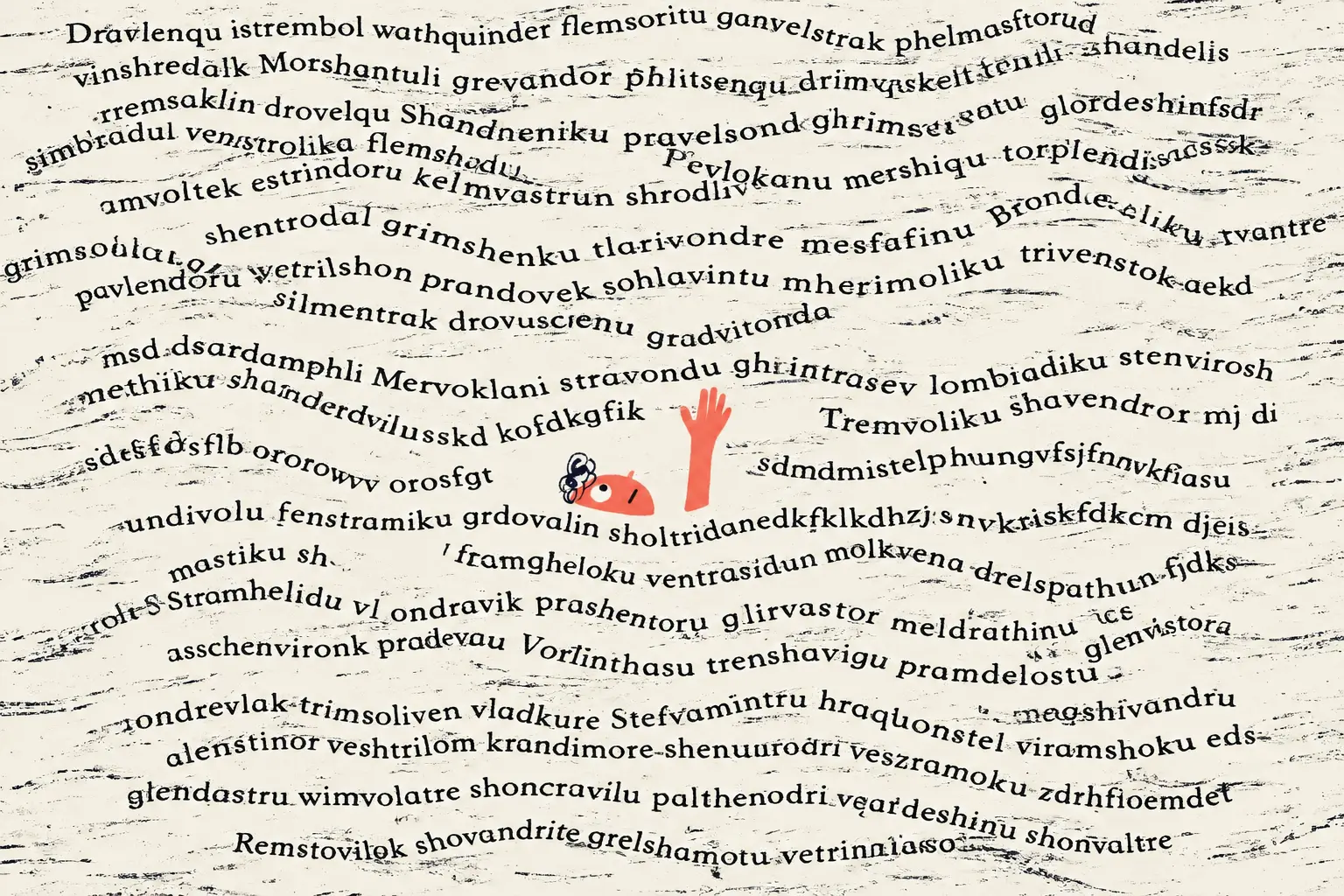
identical options on a multiple-choice question and my brain would say: Perfect. Let's pick the one that ISN'T it.
My academic childhood was basically trying to convince the world that I did know things, even though my grades had a different version of events. And of course I grew up developing my own techniques. If I couldn't memorize something the way everyone else did, I made up a story. If I didn't understand an explanation, I turned it into a picture. If I didn't know how to spell a word, I found another one. I still do it. There are words I've been avoiding for 46 years. I can't spell them. I have no intention of learning. And we've managed to live perfectly happily apart.
I also have a very interesting relationship with numbers. I can be looking at a phone that says 5847 and tell you 5487. Look again. 5847. “Yes, yes, 5487.” My brain is absolutely convinced. Passwords, dates, addresses, reservation numbers… for me they all have the potential to turn into something else. So when someone tells me, “I sent you a six-digit code,” I think: Why would you do that to me? Send me a picture.
But here comes the part that took me many years to understand. Everything that made me feel less smart as a child ended up forcing me to develop other things. I became observant. Creative. Intuitive. I learned to figure things out. I learned to find another way when the usual way didn't work for me. And above all, I developed a slightly absurd kind of determination.
Because when certain things have cost you a little more your whole life, you learn something very important: struggling doesn't mean you can't. It means you're going to find a way. And I think a big part of my life has been exactly that. I can't do it this way. Fine. I'll do it that way. I don't get it from here. I'll go around. It doesn't exist. I'll invent it.
And when I think about it, that way of working is in absolutely everything I've done. In cooking without exactly following a recipe. In creating things from scratch. In imagining projects before I have any idea how on earth they're going to get done. In seeing connections someone else might not see. In jumping in. In getting it wrong. In trying again. For many years I thought I had to learn to think like everyone else. And it turns out one of my greatest strengths was precisely that I never could.
And I don't want to fall into that line about everything hard ending up beautiful either. Because no. Not everything hard turns into something beautiful. Some things just hurt. Some stages cost you so much, and they don't need a little bow at the end to have been worth it.
But I do believe this: sometimes the thing you spent years thinking was your great disadvantage, the thing you were sure would hold you back from getting where you wanted to go, ends up developing exactly the parts of you that one day take you there. Maybe you don't succeed in spite of it. Maybe, in part, you succeed because of everything you had to learn to live with it.
For me, dyslexia and attention deficit taught me to trust deeply in something that wasn't written on any exam: my way of seeing things. My brain takes the strangest routes. Sometimes way too strange. Sometimes it goes through Monterrey to get to New York. But it gets there.
And today, if I could sit down with that little girl who suffered every time the teacher said “we're going to take turns reading,” and who would start desperately counting how many kids were left before it was her turn… I'd tell her: relax.
Yes, you're going to keep mixing up numbers. Yes, you're going to send texts with made-up words. Yes, you're going to read things completely different from what they actually say. Yes, you're going to walk into a room and forget what you went in for. And yes, autocorrect is going to be one of the most important relationships of your life. But you're also going to create. You're going to write books, which, frankly, shows God has quite a sense of humor. You're going to build projects. You're going to do things you can't even imagine right now. And one day you're going to stop thinking your mind is made wrong. You're going to understand that it's simply made differently.
So yes: thank God I'm dyslexic. And thank God for this mind that sometimes can't focus for even five minutes. Because it made me search. It made me persist. It made me creative. It made me lose my fear of not knowing. And above all, it taught me something I would have loved to know as a little girl: what you think today might be the end of your possibilities isn't necessarily the end.
And if you can't find the door, you can look for a window. Or dig a hole. Or knock on the house next door. I don't know. I'm dyslexic and, on top of that, I get distracted. But we'll figure out how to get in.
— Corde